
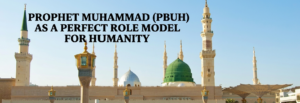
The life of Prophet Muhammad (PBUH) serves as a holistic model for modern society, providing a practical framework for justice, equality, and compassion. His message systematically dismantled systems of oppression and established an egalitarian standard that is highly relevant today.
The Greatness of Muhammad (SW):
In the history of mankind, Prophet Muhammad (PBUH) stands as the ultimate embodiment of character and magnanimity. Allah the Almighty states in the Holy Quran: “And indeed, you are of a great moral character” (Surah Al-Qalam: 4). Every aspect of the ProphetÕs (PBUH) life was adorned with mercy and nobility. The lessons of forgiveness, generosity, and compassion he displayed remain eternal teachings for the entire world. He is the Role Model for the 21st Century
The life of Prophet Muhammad (PBUH) has captivated historians, philosophers, and billions of believers for over fourteen centuries. His greatness is not merely a matter of religious conviction but is grounded in a historical record that showcases an unparalleled societal transformation and the establishment of a moral code that continues to guide humanity.
A Transformation Without Parallel:
One of the most compelling evidences of the Prophet’s (PBUH) greatness is the sheer scale of change he brought to the Arabian Peninsula. Before his mission, the region was characterized by tribal warfare, female infanticide, and a lack of central authority. Within 23 years, he united these warring tribes under a single faith and a sophisticated legal system. This was achieved not through mere conquest, but through a fundamental shift in the human heart. As historian Michael H. Hart noted in his book The 100: A Ranking of the Most Influential Persons in History, Muhammad (PBUH) was the only person in history who was “supremely successful on both the religious and secular levels.”
Abolition of Tribalism:
He replaced blood-lineage loyalty with the concept of the Ummah (community), where the only criterion for superiority was piety (Taqwa).
- Elevation of Women’s Rights: In a society where women were often treated as property, he introduced laws of inheritance, the right to refuse marriage, and the right to own property rights that many women in the West did not achieve until the 19th and 20th centuries.
- Economic Equity: He established the system of Zakat (obligatory charity), ensuring that wealth circulated to the poorest members of society.
Character as the Ultimate Evidence:
Long before receiving the first revelation at the age of forty, Muhammad (PBUH) was known in Mecca as Al-Amin (The Trustworthy) and As-Sadiq (The Truthful). In the harsh tribal society of pre-Islamic Arabia, where alliances were volatile and trust was scarce, his unblemished reputation stood as a rare beacon of stability and virtue. His title of Al-Amin was a practical reality of daily life. Merchants and travelers left their valuables in his custody, knowing they would be returned intact. Similarly, his title of As-Sadiq represented an uncompromised moral standard. This integrity became a crucial turning point when he began his mission: when he climbed Mount Safa to call his people to monotheism, the Quraysh did not doubt his honesty, as they had never heard a lie from his lips.
The Treaty of Hudaybiyah:
The Treaty of Hudaybiyyah (6 AH) is a profound example of the Prophet Muhammad’s (PBUH) strategic foresight and humility. Facing opposition from the Quraysh while attempting to perform the pilgrimage, he chose diplomacy over confrontation. Even though his followers were eager to press their advantage, he accepted terms that initially seemed highly disadvantageous, including returning to Medina without completing the pilgrimage and agreeing to a ten-year truce. This decision demonstrated that his true objective was not personal glory, but the preservation of human life and the peaceful spread of truth.
The Conquest of Mecca By Muhammad (SW):
The ultimate proof of his mercy occurred during the Conquest of Mecca. After enduring years of severe persecution, torture, and exile, the Prophet Muhammad (PBUH) returned to the city not as a vindictive conqueror, but as an agent of peace. Instead of seeking retribution or taking revenge, which was the standard and expected practice of warfare at that time he stood before the people who had oppressed him and declared a universal, general amnesty. He forgave them all and said the legendary words: “Go, for you are free.” This extraordinary act of clemency demonstrated profound humility, grace, and mercy. It transformed enemies into allies and solidified the foundation of an ethical, just society based on forgiveness rather than the cycle of violence.
Intellectual and Scientific Foresight:
The Prophet (PBUH) emphasized the pursuit of knowledge as a religious duty, famously stating: “The seeking of knowledge is obligatory for every Muslim.” This spark led to the Islamic Golden Age, resulting in massive advancements in medicine, algebra, and astronomy. Furthermore, many of his teachings regarding hygiene and health were centuries ahead of their time:
- Quarantine: He instructed that if a plague breaks out in a land, one should not enter it, and those inside should not leave a perfect description of modern quarantine protocols.
- Environmentalism: He forbade the cutting of trees during war and encouraged the planting of saplings even if the Day of Judgment were imminent.
A Legacy of Universal Values:
The greatness of the Prophet (PBUH) transcends the boundaries of Islam. His final sermon (The Khutbah of Arafat) remains one of the most significant human rights declarations in history. He stated:“An Arab has no superiority over a non-Arab, nor a non-Arab has any superiority over an Arab; also a white has no superiority over a black, nor a black has any superiority over a white except by piety and good action.”
Tolerance and Kindness of Muhammad (SW):
Patience at Ta’if: While preaching in Ta’if, he was pelted with stones until his shoes filled with blood. When Angel Jibril (AS) offered to crush the city between two mountains, the Prophet of Mercy replied: “No, I hope that Allah will bring forth from their progeny people who will worship Allah alone.”
Kindness to Neighbors: His magnanimity extended to all. A famous tradition tells of an old woman who spread thorns in his path every day. When he did not find thorns one day, he visited her to inquire about her health. Touched by his character, she embraced Islam.
Mercy Towards Prisoners:
Following the Battle of Badr, the Prophet Muhammad (PBUH) demonstrated unprecedented mercy and foresight toward the prisoners of war. Recognizing the critical need for education in early Islamic society, he established a revolutionary ransom system: any literate prisoner who taught ten Muslim children how to read and write would be granted their freedom. He instructed his companions to treat the prisoners with utmost dignity, even sharing their own limited food rations while the companions ate dates. This act of compassion and prioritization of knowledge transformed former enemies into contributors to the community’s growth.
Conclusion:
The greatness of Prophet Muhammad (PBUH) is evidenced by his enduring influence. He was a leader, a judge, a father, a friend, and a spiritual guide who lived his life in the full light of history. He taught that the highest form of worship is the service of humanity, leaving behind a legacy that continues to inspire billions to strive for a more just and compassionate world.